Quiet, Please: How to Hear a UK Holiday Let Before You Book It
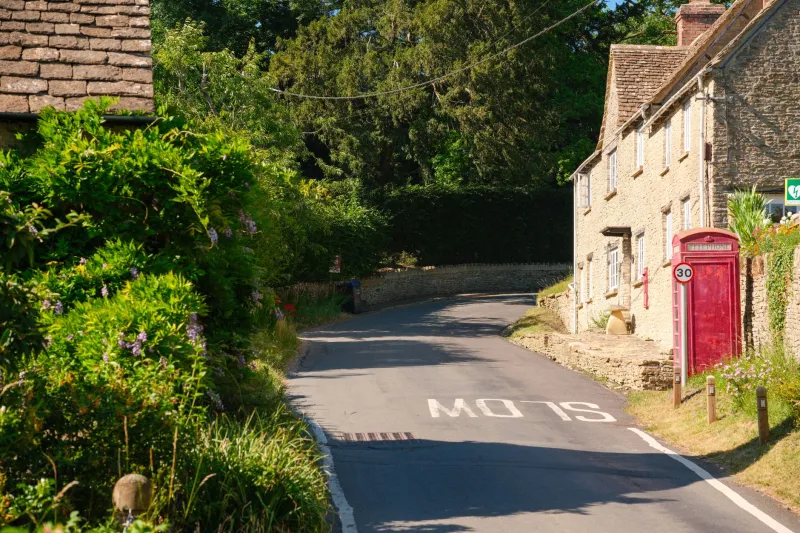
Every holiday let listing is a silent film. You get the wide shot of the valley, the close-up of the woodburner, the tasteful shot of a gin glass on a windowsill. What you never get is the audio track: the 5am gull convention, the Friday-night beer garden, the distant thrum of a dual carriageway that nobody thought to mention.
Noise is one of the few things you genuinely can't fix once you've arrived. You can turn a radiator down. You can't turn a church bell off. So before you book, it's worth doing a proper noise audit — and it's easier than it sounds.
Start with the map, not the photos
Open the listing in one tab and a map in the other. Switch to satellite view and zoom in properly. What's actually next door? Not what's in the description — what's physically there.
Look for the obvious offenders first. A pub with a large garden, a village hall, a school, a farmyard with a few hundred birds in it, a sports club with floodlights. Then look for the less obvious ones: a church tower, a railway line, a depot, a car wash, a kennels, a wedding venue with a marquee-shaped shadow on the grass.
Street View is your friend here, but use it carefully. Drop the little yellow pegman on the road outside and spin around. If the view is a blank grey wall, try the lane at the end of the drive instead. You're not looking for beauty — you're looking for the things that make noise at 7am on a Sunday.
Ordnance Survey is worth a look too, especially in rural areas. A footpath running right past the garden is lovely until you realise it's the main route to a popular summit and the first boots crunch by at half six.
Read the reviews like a noise detective
Guests rarely complain outright about noise — but they do mention it, usually buried in paragraph four of an otherwise glowing review. Words to scan for: "lively", "handy for the pub", "you can hear the road", "the bells take a bit of getting used to", "a little traffic in the morning", "the hot tub was lovely".
The last one is worth pausing on. Hot tubs are not quiet. The pump hums, the bubbles roar, and if it's on a deck outside the main bedroom window it will be the last thing you hear before sleep. If a listing mentions a hot tub, assume you'll hear it, and check where it sits relative to the bedrooms.
Also read between the lines of the owner's own description. "Perfectly placed for exploring" often means "on a main road". "In the heart of the village" means you're sleeping next to whatever the village does at night. "Peaceful rural setting" is usually true — but check whether "rural" means a farm with a cockerel and a tractor that starts at dawn.
Ask the owner three specific questions
Owners are generally honest if you ask in a way that invites a real answer rather than a yes/no. Try these:
- "What can you hear from the main bedroom at 7am on a weekday?" This one is gold. It forces a concrete answer rather than a brochure-friendly one.
- "Is there anything nearby that guests have mentioned in the past?" Owners who've hosted for a while know exactly what guests comment on, and most will tell you.
- "Is there anything happening in the village that weekend?" A village fete, a festival, a wedding, a hunt meet, a road closure with diverted lorries — all worth knowing before you arrive with a sleeping toddler.
If the answers come back vague and breezy, that's information too. A host who can't tell you what the mornings sound like probably hasn't stayed there themselves.
Match the soundtrack to your break
Here's the bit people skip: noise isn't objectively bad. It's only bad if it doesn't suit the trip you've booked.
A lively pub garden twenty metres away is a genuine bonus if you're away for a long weekend with friends and plan to be in it. It's a nightmare if you've booked a quiet week to finish a manuscript. A railway line is charming if you have a train-mad six-year-old and a nightmare if you don't. Seagulls in a Cornish harbour town are part of the deal — the trick is knowing whether your bedroom faces the harbour or the bins behind the chip shop.
So before you book, write down the two or three things you actually need from the trip. Silence for a writing week. A short stagger home from a decent pub. Space for the dog to bark without upsetting neighbours. Then check whether the property's real acoustic profile delivers them.
The things nobody thinks to ask about
A few sound sources that rarely make it into listings but regularly wake people up:
- Church bells. Beautiful, and often rung for practice on a weekday evening, plus Sunday mornings, plus weddings.
- Bin lorries and deliveries. In a narrow village street, the 6.30am glass collection is a full sensory experience.
- Heat pumps and boilers. Modern air-source units are efficient but not silent, and they're often sited right under a bedroom window.
- Neighbouring windows. In a terraced cottage or a converted barn, the neighbours' bathroom extractor fan can be surprisingly clear.
- Creaky floorboards and shared walls. Not noise from outside, but the kind of noise that matters in a converted building. Reviews will mention it if it's a problem.
- Low-flying aircraft. Rarely relevant, but worth a quick check if you're near a flight path or an RAF base.
The final check
Before you commit, do one last thing: open the map, pick a random weekday, and imagine yourself standing at the front door at 7am and again at 11pm. What can you hear? If you can picture it clearly and it sounds fine, book it. If you can't picture it at all, keep asking questions.
The view is what sells a holiday let. The soundtrack is what you actually live with for a week. Both deserve a look before you pay.