The Garden Test: How to Tell a Real Outdoor Space From a Listing's Green Wording
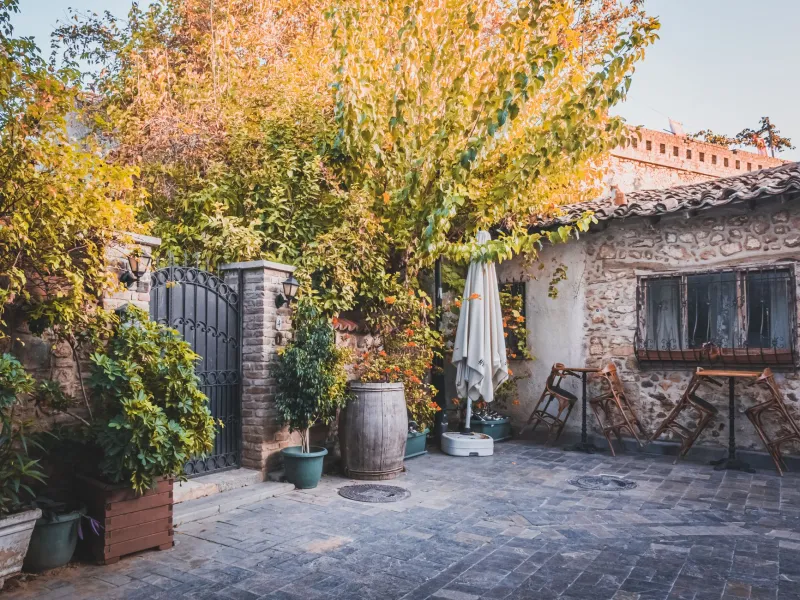
Outdoor space is one of those holiday-let features that sounds straightforward until you start comparing listings. Two cottages can both promise a 'private garden' and yet one gives you a secure lawn with a gate and a view over fields, while the other gives you a strip of paving beside the parking area and a reminder to keep the blinds down. Neither is necessarily dishonest. The trouble is that 'private' is doing a lot of heavy lifting in UK holiday-let descriptions, and it is worth decoding before you pay a deposit.
Start with the map, not the photos
Listing photos are chosen to flatter. That is not a criticism; it is just how marketing works. Before you fall for the hanging basket and the two rattan chairs, open a satellite map and find the property. Look at what sits immediately around it: a road, a farmyard, a pub car park, a row of neighbouring roofs, a shared driveway, or a patch of grass that seems to belong to several buildings at once.
Street View can be useful too, even if the images are a few years old. It will not tell you whether the fence was replaced last spring, but it can reveal whether the 'garden' fronts onto a busy lane or sits behind a petrol station. If the listing gives only a vague location, ask for the postcode or the nearest landmark. A host who will not narrow it down at all is giving you useful information in itself.
Read the wording like a contract
Some phrases are more precise than others. 'Enclosed garden' suggests boundaries, though not necessarily dog-proof ones. 'Private patio' usually means a seating area for your use, not a lawn. 'Shared garden' is exactly what it says. 'Overlooked' is refreshingly honest when it appears, and 'access via the owner's driveway' tells you that your private patch may come with a shared approach.
Watch for softer wording such as 'outdoor space', 'garden area', 'use of garden' or 'patio to the rear'. None of these is a red flag on its own, but they are prompts to ask more. The same goes for phrases like 'dogs welcome, garden not fully secure' or 'children should be supervised near the pond'. These are helpful warnings, not reasons to walk away, but they change how you should picture the stay.
Boundaries and access: the two questions that settle it
If the outdoor space matters to your trip, ask two direct questions. First: what are the boundaries, and how high are they? A low hedge may look lovely and do nothing to keep a determined spaniel in. A fence with a gap under the gate is fine for a quiet coffee and useless for a toddler. Second: who else uses the access? If the owner needs to cross the patio to reach a storage shed, or the neighbour's bin store sits at the end of your lawn, you are not really private, however pleasant the space may be.
Other details worth checking include steps, slopes, gravel, decking and lighting. A courtyard that looks charming in July may be slippery in November. A garden with a steep drop may be beautiful but unsuitable for young children. And if you are arriving after dark, ask whether there is an outside light or whether you will be finding the key by phone torch.
Match the space to your actual morning
Think about the version of you who will actually use the garden. If you plan to sit out with a coffee at 7am, is the space overlooked by a neighbouring kitchen window? If you are bringing a dog, is the garden secure, and are there livestock or public footpaths nearby? If you have children, is there a gate that latches, or a pond, or a barbecue that looks inviting but needs supervision?
A small courtyard can be perfect for a couple who want fresh air and a glass of wine. A large lawn can be wasted on someone who is out walking all day. The point is not to demand a country estate; it is to make sure the outdoor space matches the way you will use it. A private garden that is really a shared path with a bench is not a disaster, but it is a different holiday from the one you imagined.
Ask for a photo from the door
If the listing photos are ambiguous, ask the owner for a recent photo taken from the back door looking out, and another looking back at the property. This is a simple request and most hosts will oblige. Wide-angle listing shots can make a six-foot patio look like a lawn, so a phone snap from standing height is often more useful. A short video can be even better if boundaries, gates or shared access are part of the question.
You can also ask when the photo was taken. A garden photographed in high summer may look denser and more private than it does in early spring. That is not a trick; it is just seasonal reality. If privacy from neighbours matters to you, ask whether the garden is overlooked and from where.
A short checklist before you click book
- Find the property on a satellite map and look at what surrounds it.
- Note whether the listing says private, enclosed, shared or overlooked.
- Ask who else uses the access to the outdoor space.
- Check fence height, gate security and any gaps or drops.
- Confirm whether the garden is safe for dogs or children, if that matters to you.
- Ask for a recent photo from the door, not just the wide-angle hero shot.
- Consider the season: foliage, lighting and surface conditions all change.
A good holiday let should be clear about what it is offering. If the outdoor space is central to your plans, treat the garden description as a starting point rather than a promise. A few questions before booking can turn a vague patch of green into a space you can actually relax in, whether that means a secure lawn for the dog or a quiet corner for your first cup of tea.