Spaces, Permits and Squeezes: Decoding Parking at UK Holiday Lets
Most of us scroll a holiday-let listing in a fairly predictable order: photos, price, location, then maybe the reviews. The parking paragraph sits somewhere near the bottom, wedged between bin day and Wi-Fi. That's a mistake. In a country of narrow lanes, residents' bays and driveways built for a smaller car, those few lines can tell you more about the practical reality of a stay than a wide-angle shot of the kitchen.
This isn't about being negative before you've even packed. It's about knowing what you're booking. A parking detail that sounds generous in a listing can mean something quite specific on the ground, and a little decoding now saves a lot of circling later.
'Off-road parking' is a broad church
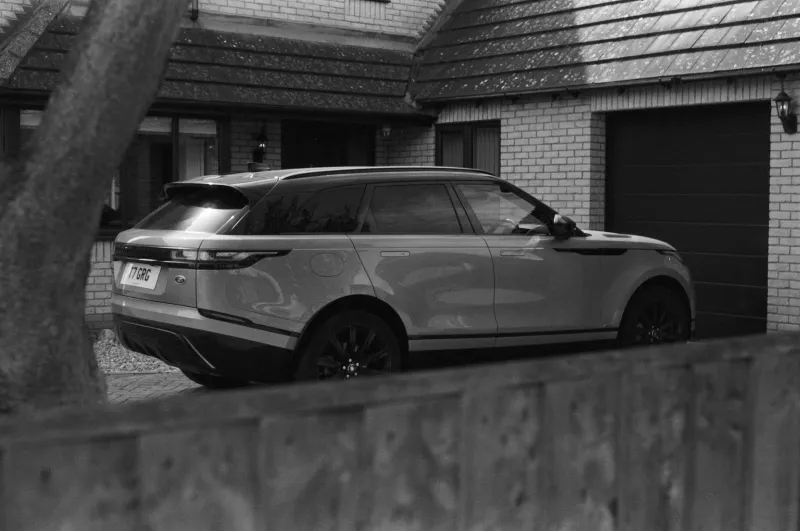
'Off-road' can mean a private driveway, a marked bay in a courtyard, a gravel patch beside a barn, or what is essentially a lawn with ambitions. It can also mean a space that is technically off the road but practically a puzzle: tight gateposts, a wall on one side, a hedge on the other, and a turning circle that assumes you've brought a hatchback rather than an estate.
When a listing says 'parking for one car', ask whether that car can be a normal family car — and whether everyone in the group is arriving in one vehicle. Two couples meeting from different directions is a common UK break pattern, and a one-car space suddenly becomes a negotiation. If the answer is 'there's usually space on the road', treat that as a separate question, not a bonus.
Permits, zones and the one-permit promise
Seaside towns and city centres often run residents' parking zones, and a listing may say a permit is included. That's helpful — but a permit is not the same as a guarantee. It might cover one vehicle only, need to be collected from a management office, or come with a deposit. Some permits are physical; others are digital and need the registration number in advance. If you're arriving late, check how you get the permit and what happens if the office is closed.
Look for the difference between 'parking permit provided' and 'parking available nearby'. The second can mean a pay-and-display car park five minutes away, which is fine if you know it. It is less fine if you assumed the car would sit outside the door. Council car parks can also have height barriers, evening charges or market-day closures. None of these are deal-breakers, but they are arrival-day details worth having in your head.
The last mile: lanes, passing places and low branches
Rural lets have their own parking grammar. A single-track lane with passing places is manageable if you're expecting it; it's less relaxing at dusk with a car full of tired passengers and a sat-nav that has taken an imaginative route. Listings sometimes mention 'narrow access' in a throwaway way. Take that seriously. Ask whether a standard car can get through, whether there is anywhere to turn at the property, and whether the lane is used by tractors or delivery vans.
Also consider what you're driving. A roof box can meet a low branch or a car-park height bar. A long wheelbase can turn a tight gateway into a three-point shuffle. An electric vehicle might be fine on the lane but need a plan for charging. If you're bringing bikes, a trailer or a van, say so before booking — not because the owner is being difficult, but because the access may genuinely not suit it.
EV charging: the badge is the beginning, not the end
More UK lets now advertise EV charging, and it's a genuinely useful feature. The details matter, though. Is it a dedicated 7kW wallbox or a three-pin socket with a cable? Is there a fee, an app, or a fair-use limit? Is the charger shared with the owner's car or another let next door? Is the cable tethered or do you need to bring your own? A three-pin charge is better than nothing, but it is slow enough to shape your days. A wallbox that's blocked by the only parking space is a different kind of puzzle.
If charging is essential to your trip, ask for the connector type and whether the space is reserved for the charging car. And check the local area: a nearby public charger can be a useful backup, but not if it's always busy on a summer weekend.
Unloading is its own small sport
Even when parking is sorted, the first ten minutes can be awkward. Some properties sit on busy roads with double yellows, others have a shared courtyard where you can't leave the car while you carry bags in. A listing that says 'load outside then park' is being honest, but it helps to know where you're parking afterwards and how far the walk is with a cool box and a dog.
Arrival time matters too. If check-in is 4pm and the only nearby car park fills by lunchtime in peak season, a slightly earlier arrival plan might be wise. None of this needs to dominate your break. It just needs five minutes of thought before you click book.
A short pre-booking parking checklist
- How many vehicles does the space hold, and what size are they?
- Is the space private, shared or on-street?
- If a permit is included, how many cars does it cover and how do I get it?
- What is the access like — narrow lane, tight gateway, low barrier, steep slope?
- Can I unload near the door, and where do I park afterwards?
- Is there EV charging, what type, and is it extra?
- Are there height or width restrictions for vans, roof boxes or trailers?
- What happens if I arrive after dark or outside office hours?
If the owner can answer those clearly, you've learned a lot. If the answers are vague, that's useful information too. It doesn't automatically mean a bad let; it might simply mean the parking is ordinary and unremarkable. But a vague answer to 'where exactly will the car go?' is worth a follow-up before you commit.
Parking is rarely the reason people book a UK holiday. It is, occasionally, the reason a lovely weekend starts with a tense twenty minutes in a cul-de-sac. Read the paragraph, ask the question, and give yourself a calmer arrival. The cottage, the coast and the pub lunch are waiting — preferably with the car already parked.